[category]
[title]

Review

Broadway review by Adam Feldman
[Related: An in-depth discussion of Marjorie Prime with playwright Jordan Harrison and director Anne Kaufman on Time Out's theater podcast, Sitting Ovations.]
Jordan Harrison’s Marjorie Prime is set in the 2060s, and it imagines a world in which artificial intelligence has been modeled into realistic holographic forms: companion robots who look and sound like figures from their owners’ pasts, and thus serve as triggers for—and repositories of—those owners’ fading memories. The octogenarian and increasingly addled Marjorie (June Squibb), for example, can spend time with a reincarnation of her late husband, Walter (Christopher Lowell), as she remembers him in his prime: young, handsome, romantic. This android learns quickly; the question is what to teach him. The more this purified Walter knows about their shared history, the more fully he can inhabit his role as her emotional caregiver. The less he knows, on the other hand, the better he can stick to the stories she wants to hear.
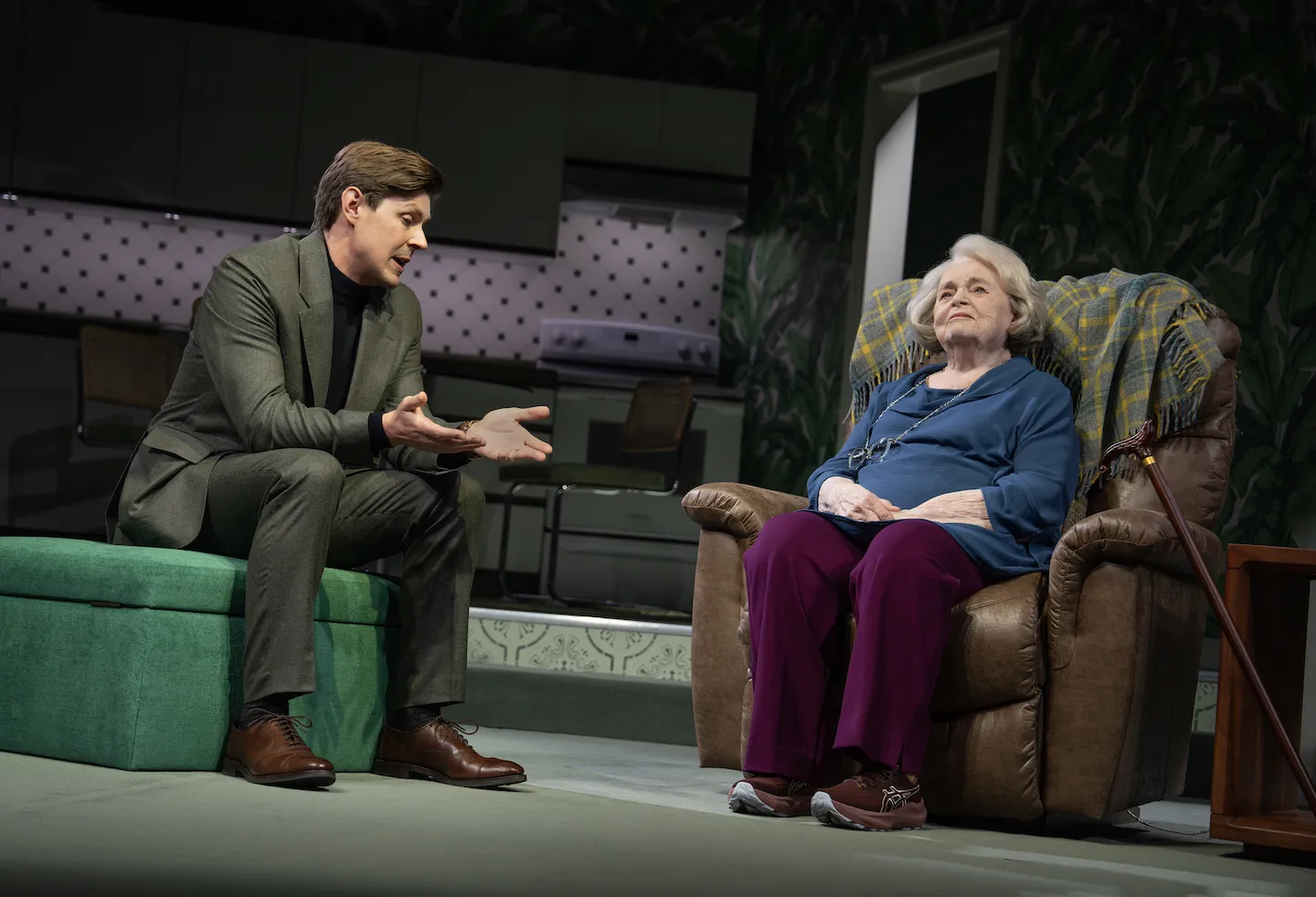
Marjorie Prime | Photograph: Courtesy Joan Marcus
“Time will tell if A.I. ever becomes a reality,” wrote Time Out’s David Cote in his review of the play’s 2015 premiere at Playwrights Horizons, “but the human parts of Harrison’s smart, lovely play are built to last.” He was certainly right about the latter: Harrison’s drama is currently on Broadway, in a Second Stage production directed once again by the needle-sharp Anne Kauffman, and if anything it feels even deeper and more moving than it did the first time around. But it’s slightly shocking, when one reads what Cote wrote, to realize how quickly the play’s vision of A.I., which sounded fantastical a decade ago, seems just around the corner today. Time has already told, far faster than anyone thought, and that makes Marjorie Prime now seem not just prescient but urgent.
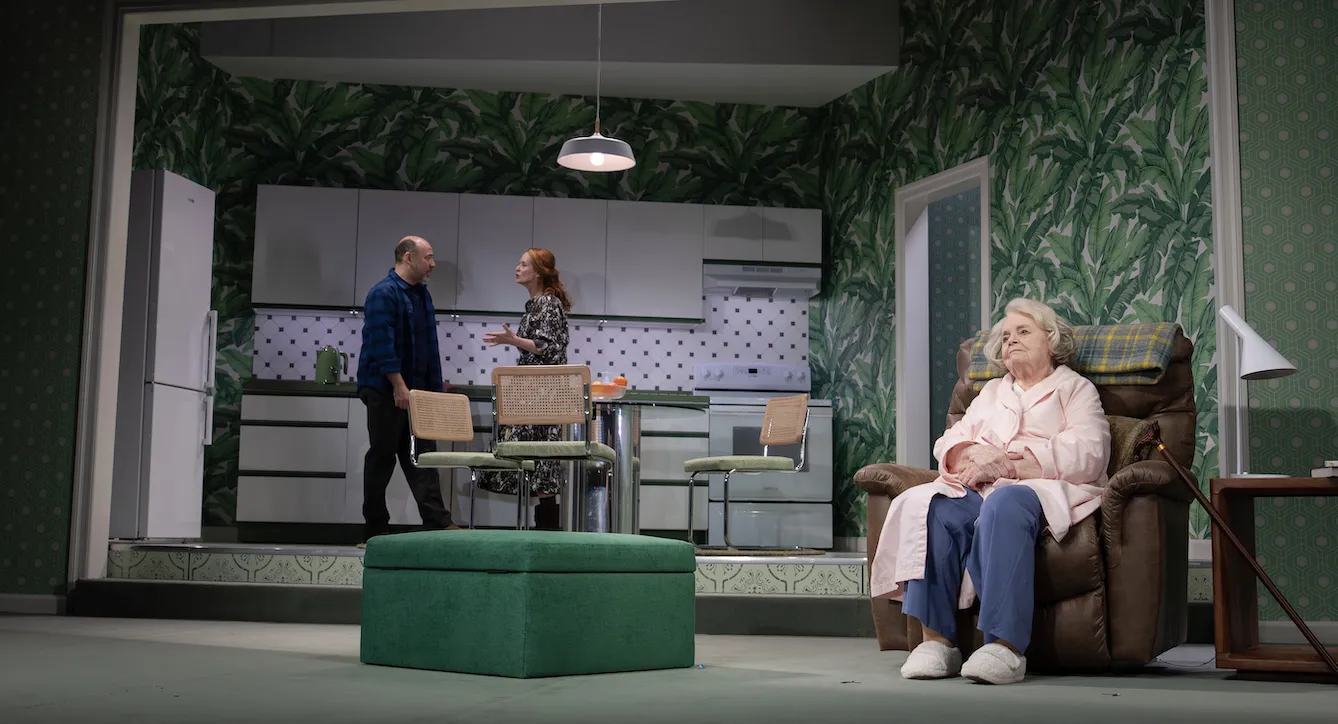
Marjorie Prime | Photograph: Courtesy Joan Marcus
It would be unfair to Harrison’s elegant construction to explain too much about how the play develops, but it is built around a profoundly human trauma: an event that tore through Marjorie Prime’s central family in the past, leaving scars as well as untreated wounds that continue to ooze decades later. That pain is at the root of the frostiness between Marjorie and her adult daughter, Tess (Cynthia Nixon), whose husband, Jon (Danny Burstein), is closer to Marjorie than Tess is; it may also be a factor in Tess’s troubled relationship with her own adult daughter.
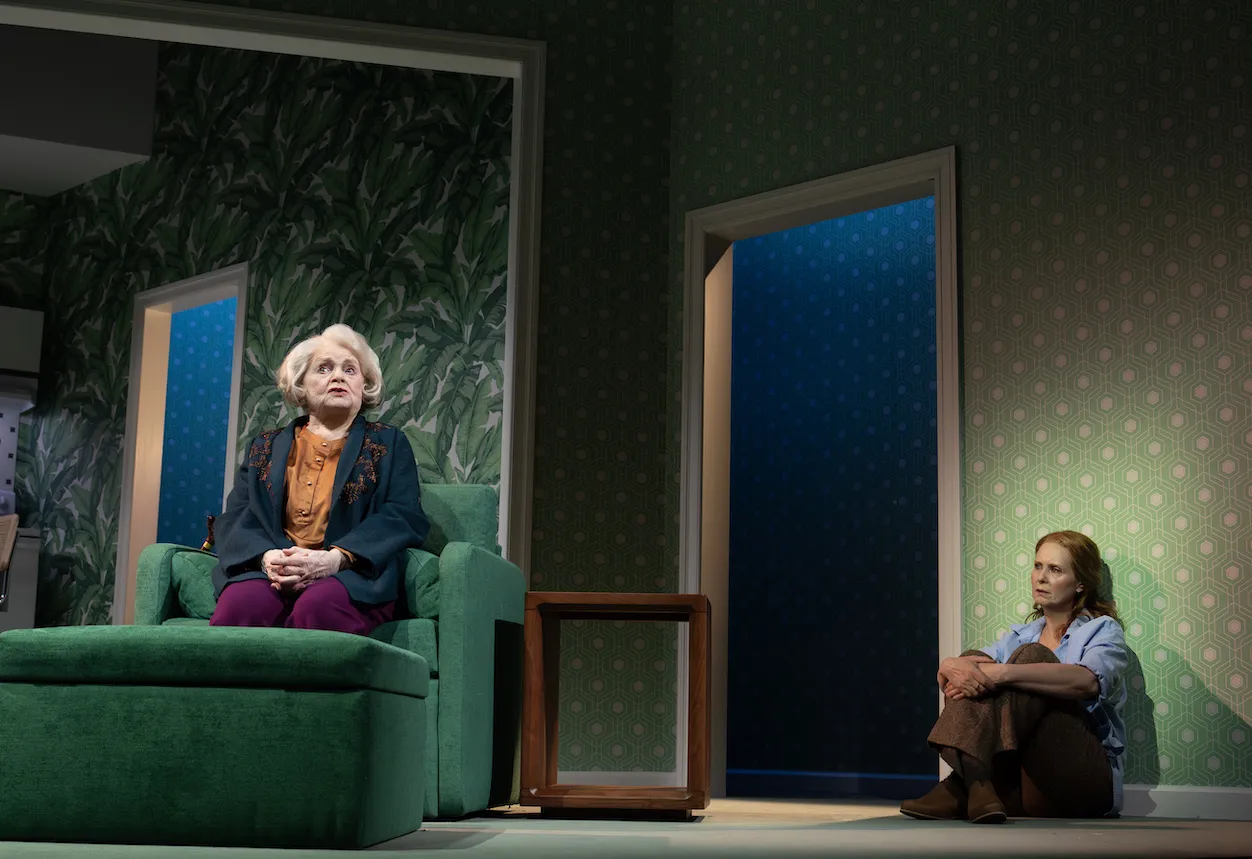
Marjorie Prime | Photograph: Courtesy Joan Marcus
Much of the pre-opening press about this revival has revolved around the 96-year-old Squibb, who might be the oldest actor ever to play a principal role on Broadway. She merits that attention with a remarkable performance that combines frostiness and fogginess into a firm coat of rime. But the other actors are equally good. Burstein, who radiates human tenderness, is perfectly employed as the play’s kindest character, and his final scene is devastating; Lowell finds the appropriate levels of stiffness and charm for his faux Walter. And Nixon is simply the best I’ve ever seen her onstage: As Tess labors to connect with her mother—or alternatively to give up any hope of connecting with her—Nixon invests her testiness with complex underlying notes of bitterness and exhaustion.
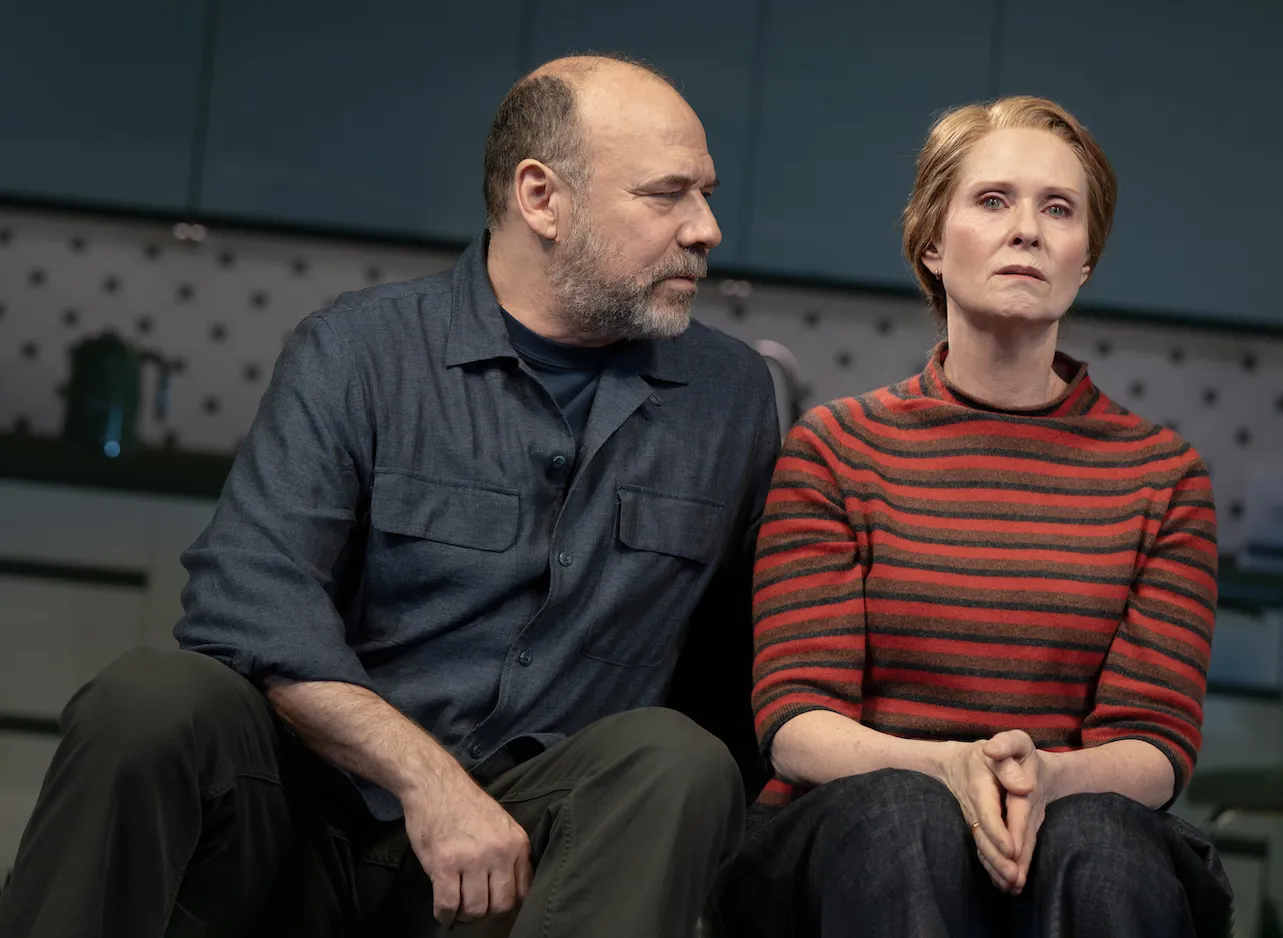
Marjorie Prime | Photograph: Courtesy Joan Marcus
Marjorie Prime is an interesting artificial-companion piece to Broadway’s other android show, the musical Maybe Happy Ending, which also deals with A.I. evolution. In Harrison’s script and under Kauffman’s direction, a sense of that evolution creeps up on you. Lee Jellinek’s set, awash in greens, initially offers naturalism with mere suggestions of futurism, such as cabinets that open upward. (One nice touch: the contrast between Marjorie’s homely live ficus plant and the unchangingly luxuriant tropical foliage of her kitchen wallpaper.) In the play’s finale, however, the staging—not just the scenery, but Ben Stanton’s lighting and Daniel Kluger’s sound—veers markedly into more traditional markers of sci-fi.
A sense of such shift is woven throughout the play. When Tess worries that the androids will grow increasingly human “until we become unnecessary,” Jon says that that sounds like science fiction. “Science fiction is here, Jonathan,” Tess replies. “Every day is science fiction. We buy these things that already know our moods and what we want for lunch even though we don’t know ourselves. And we listen to them, we do what we’re told. Or in this case we tell them our deepest secrets, even though we have no earthly idea how they work.” She’s talking about life in the 2060s, but she might just as well be talking about today. We have met the future, and it is us—or, at least, the versions of us we choose to create, made in our self-image.
Marjorie Prime. Helen Hayes Theater (Broadway). By Jordan Harrison. Directed by Anne Kauffman. With June Squibb, Cynthia Nixon, Danny Burstein, Christopher Lowell. Running time: 1hrs 20mins. No intermission.
Follow Adam Feldman on X: @FeldmanAdam
Follow Adam Feldman on Bluesky: @FeldmanAdam
Follow Adam Feldman on Threads: @adfeldman
Follow Time Out Theater on X: @TimeOutTheater
Keep up with the latest news and reviews on our Time Out Theater Facebook page
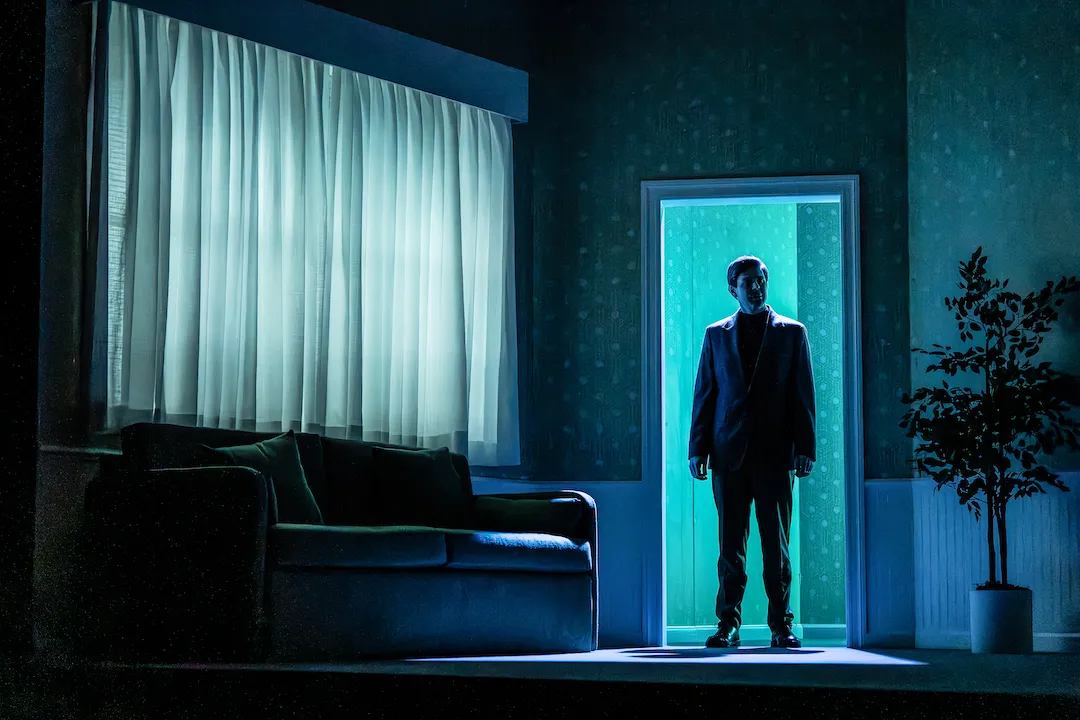
Marjorie Prime | Photograph: Courtesy Joan Marcus
Discover Time Out original video