

[image]
[title]As the August sun sets on the river in front of us, heavy bass is reverberating off the 330-year-old limestone walls of the Old Royal Naval College in southeast London. Formerly Greenwich Palace, this UNESCO Heritage Site witnessed the births of King Henry VIII and Queen Elizabeth I, Lord Nelson’s lying-in-state and William Shakespeare’s theatrical performances. Today, tens of thousands of revellers have swarmed the grounds to see it-girl DJ Peggy Gou headline the second annual edition of Labyrinth on the Thames.
RECOMMENDED: Europe’s best music festivals

The Naval College is one of the latest (and youngest) in an ever-growing lineup of heritage and protected sites around the world hosting dance music festivals. The concept isn’t entirely new, but there has been a notable surge over the past five years.
This summer, Italian party organisers Aura launched a festival at the Parco Archeologico di Segesta, a protected archaeological park near Castellammare del Golfo in Sicily. There’s also been Stone Techno Festival at the nineteenth-century Zollverein coal mine industrial complex in Essen, Germany; the BSH Festival inside the 2,000-year-old Pula Arena in Croatia; Black Coffee at the 700-year-old Buda Castle, Hungary; Fort X Festival at the fifteenth-century Mokrice Castle and Qixi festival inside the 466-year-old Yu Garden.
In many cases, these historic venues in all their majesty are as much of a draw for ravers as the headliners. It’s certainly an unforgettable experience to see artists and light shows transform ancient arenas, castles and UNESCO sites, with such unique architecture providing a visual and auditory spectacle. But do music festivals negatively impact the preservation of these centuries-old sites?
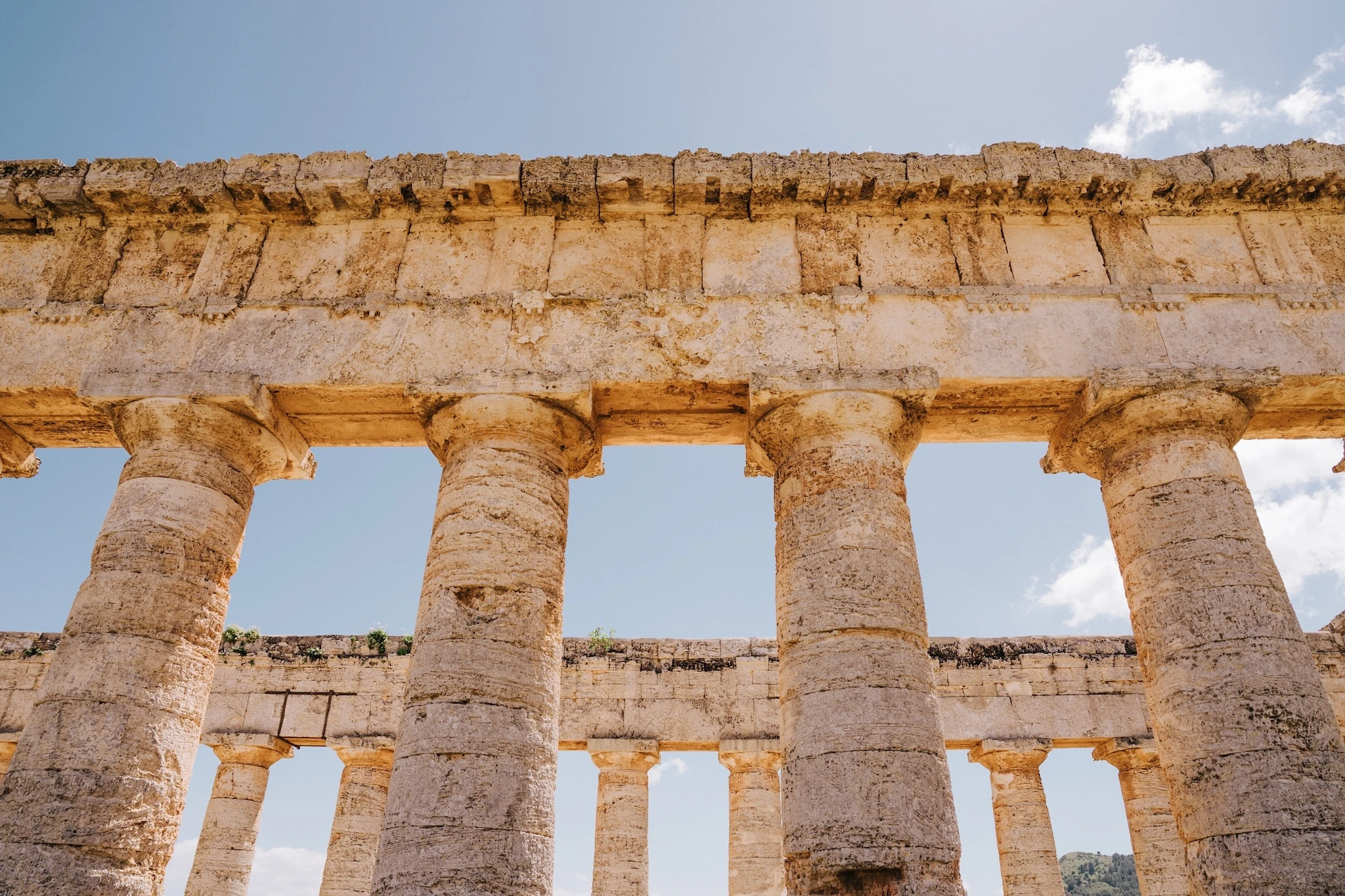
Bringing a music festival to life involves a hell of a lot of organisation, and there are far more hurdles and complexities for organisers when hosting a festival at a protected historical landmark.
While setting up Aura at the Segesta Archaeological Park in Sicily – home to a 2,500-year-old Doric temple that provided an atmospheric backdrop to DJ sets – founder Fabrizio Costa and co-organiser Matthew Hoag were in constant contact with local heritage authorities to ensure that they followed the guidelines to the letter. ‘It’s not in our interest to harm the heritage,’ Hoag clarifies. ‘On the contrary, we want to give [the sites] a new platform and make them interesting for a new generation.’
Fabrizio explains that Sicilian authorities often don’t grant final permission for the events to go ahead until the very last minute. ‘The incredible thing is that you don’t get authorisation until two days before the event,’ he says. ‘You take a risk starting the promotion and selling the tickets. You might not get permission until the day before or even the morning of.’
‘We want to give the sites a new platform and make them interesting for a new generation’
The same strict regulations apply to UNESCO World Heritage sites. UNESCO’s guidelines don’t ban events and festivals, but they do demand that vibrations and sound limits must be monitored throughout performances, speaker systems must direct bass away from the monuments and lighting must meet ‘heritage-safe intensity levels’. It also prohibits heavy equipment near foundations and requires thorough environmental and heritage impact assessments before events are approved.
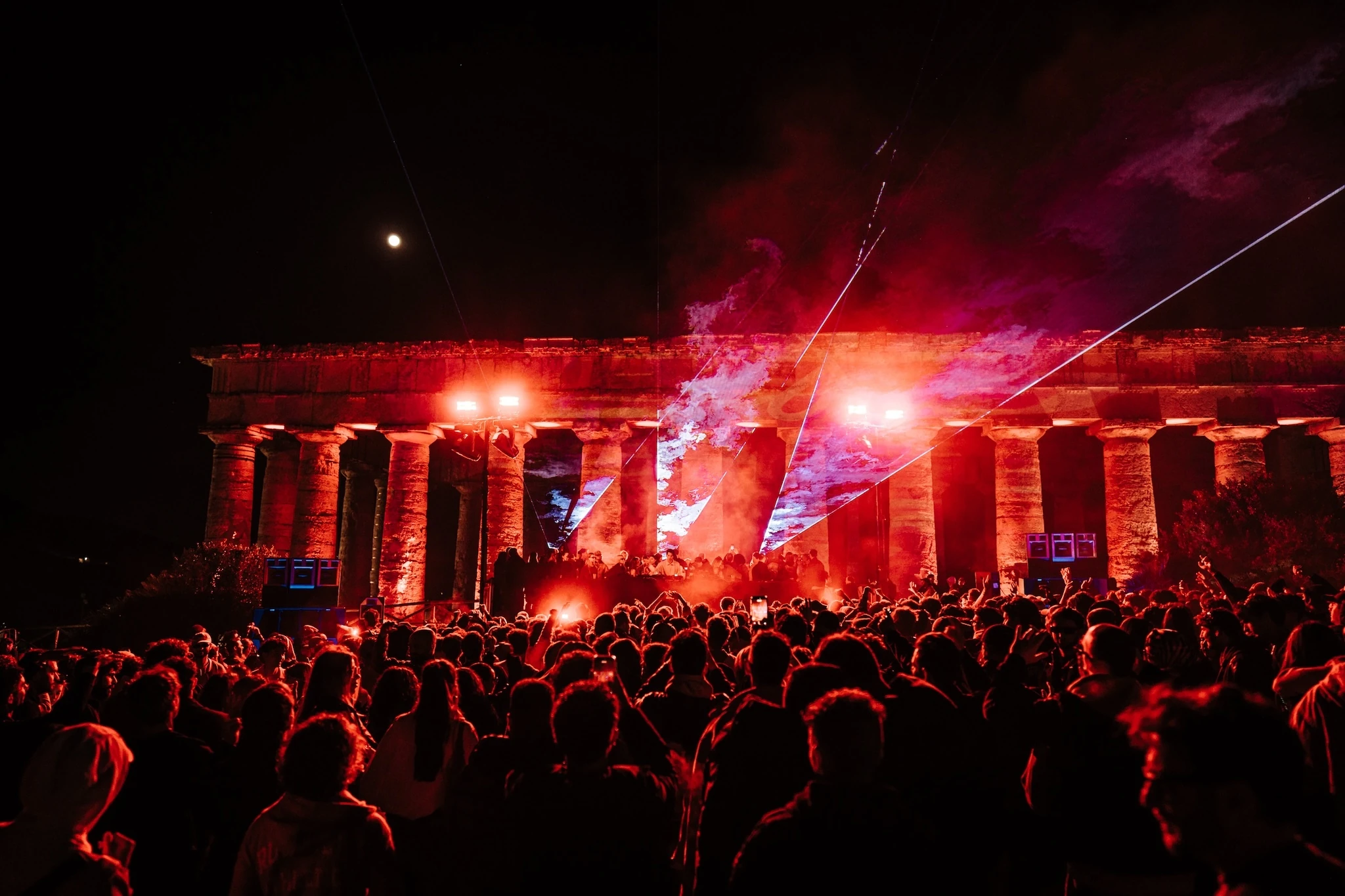
But for organisers like Fabrizio and Matthew, it’s worth the effort. ‘There is a magic in the air [at the temple] without music. Imagine what it’s like when you add the music,’ Fabrizio says. ‘In a lot of those temples, people were celebrating music back in the day,’ Matthew adds. ‘Amphitheatres were there for shows, for entertaining people. We’re giving life to these locations again.’
‘There is a magic in the air without music. Imagine what it’s like when you add it’
Last spring, the 1,500-capacity Medaina Festival brought house and techno to the 2,000-year-old sandstone city of Petra and Wadi Rum Valley in Jordan. Given the age of the site and its immense historical significance, reactions to the festival were mixed. One writer who attended reported that it was mostly attended by Westerners and ‘felt like an Arab-themed Halloween parade’, and that when speaking to locals, ‘some were ashamed to tell their parents they were assisting with the festival, while others were excited about sharing their culture and enjoying the variety of music’.
There’s no news on whether a second iteration of Medaina will take place, but this October, just across the Sinai Peninsula, another ancient wonder became the backdrop of an EDM gathering. For the very first time, a multi-day, multi-stage festival took place next to the Great Pyramids of Giza.
After taking up residency at the Petrovaradin Fortress in Serbia for 25 years, EXIT Festival moved to Egypt this month to debut its new concept, Starlight Festival. From October 9 to 10, more than 60 artists delivered sets to a crowd of 15,000 beneath the oldest of the Seven Wonders of the Ancient World. The festival isn’t directly at the foot of the 400-ft structures, but rather on a site around a kilometre away.
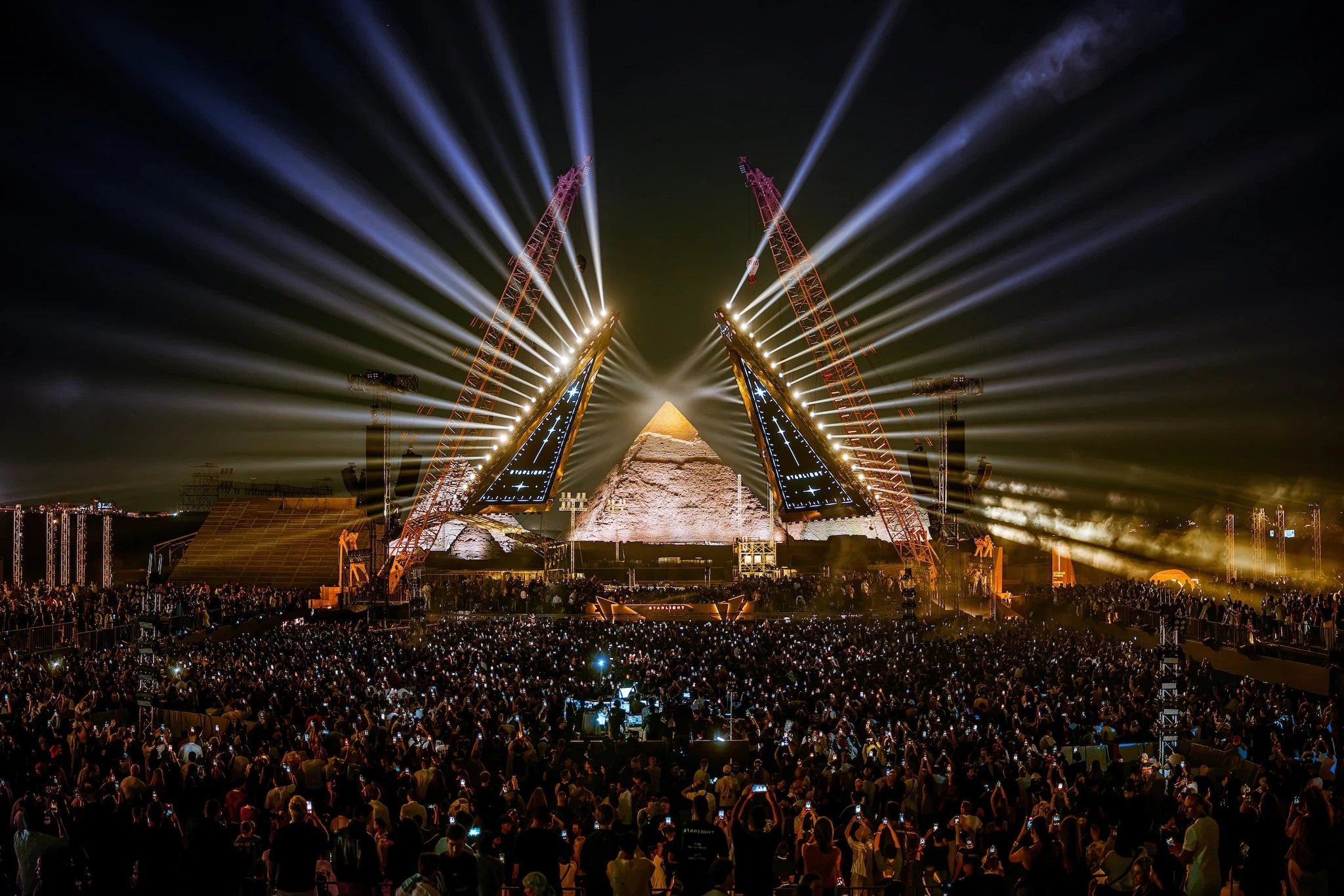
After a quarter of a century hosting EXIT Festival at Serbia’s 334-year-old Petrovaradin Fortress, Dušan Kovačević is well-versed in the intricacies of organising festivals at historically significant locations. EXIT Festival was originally born out of student protests, but can no longer be held in the country after the Serbian government withheld funding over the festival’s support of anti-corruption activists. Starlight at the Pyramids, headlined by Adriatique, Pete Tong, Charlotte de Witte and Enrico Sangiuliano, was the first of its ‘EXIT in exile’ events.
While Starlight is a first of its kind, it’s far from the first music event to be held a short distance from the Pyramids. The Grateful Dead travelled to the ancient wonder to play three shows there in 1978; Frank Sinatra performed beneath their shadow in 1979; Mariah Carey sang there in 2010 and the Red Hot Chili Peppers gigged in front of them in 2019. As we said, nothing new.
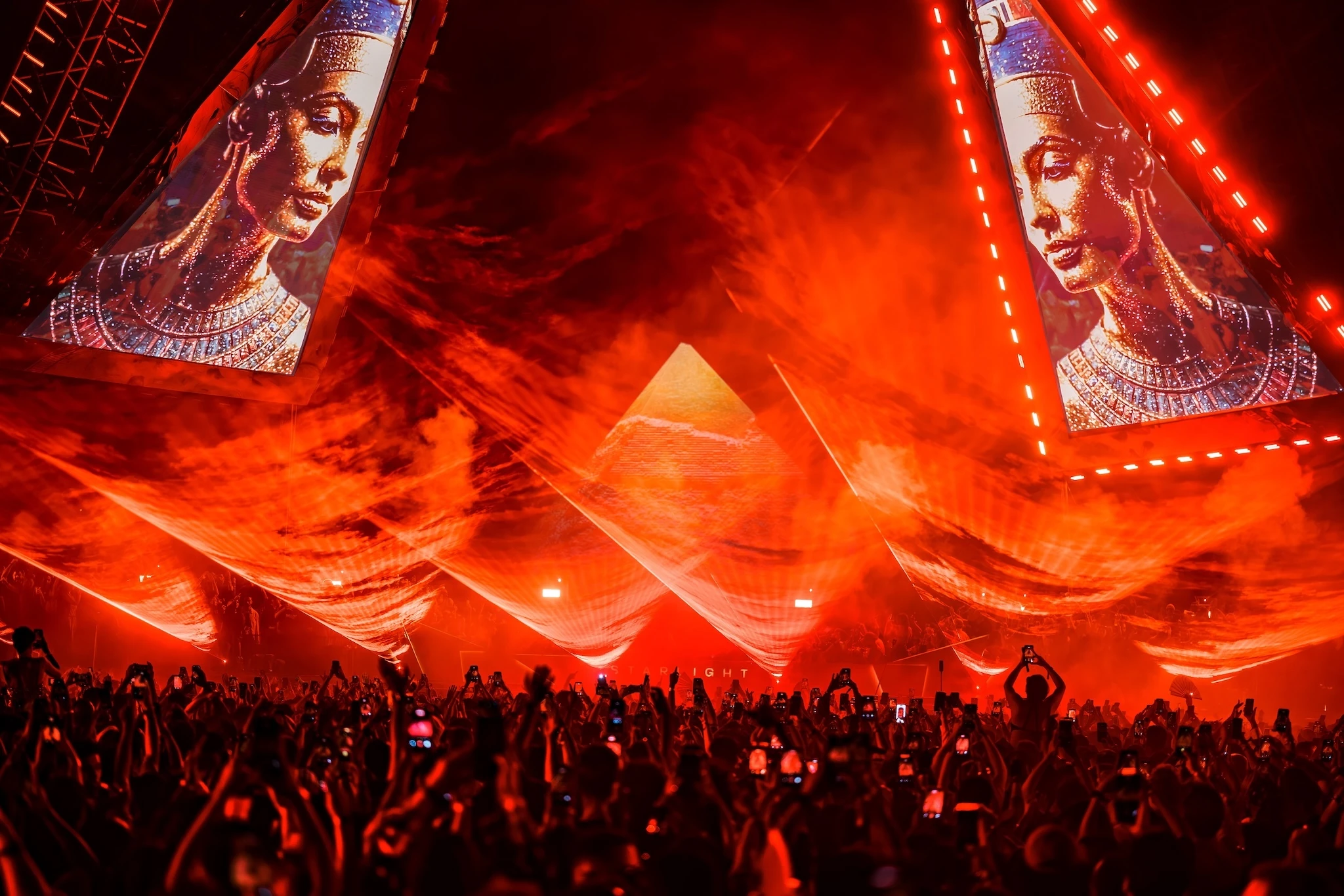
But at the end of 2025, the Egyptian Centre for Economic and Social Rights filed a lawsuit in the hopes of bringing more regulations to concerts and raves near the site. The submitted document claimed that the events are a threat to the ancient limestone structures and ‘pose a serious risk to the structural integrity of the Pyramids and their surrounding heritage environment’. It added the laser lighting involved in some of the events ‘does not comply with international standards for illumination at heritage sites’ (Starlight points out that it won’t use lasers or projections).
At the time, many media outlets suggested that the lawsuit could mark the end of events held near the site. Monica Hanna, a researcher at Arab Academy for Science, Technology, and Maritime Transport and one of the plaintiffs involved in the lawsuit, tells Time Out that’s not the case.
‘We’re not trying to police the younger generation. I myself have attended Red Hot Chili Peppers at the Pyramids years ago. I enjoy it. But protecting the archaeology of the area is our imperative for upcoming generations,’ Hanna explains. ‘We’re worried about the safety of the Pyramids. We’ve received reports from conservators that say such loud noises and lasers are dangerous for such old stones.’
‘We’re not trying to police the younger generation, but we’re worried about the safety of the Pyramids’
Instead of putting an end to the festivals altogether, Hanna and her fellow plaintiffs want them to be held at a minimum of 5km away, instead of just 1km. ‘That far away,’ she says, ‘the noise won’t hurt the archeology of the Pyramids.’
Celia Martinez, a member of the board at the International Council on Monuments and Sites, shares Hanna’s concerns. She’s worried about the commercialisation of the monuments that host parties. ‘These sort of festivals can be super interesting if they consider the heritage and integrate it into the spectacle. What is not acceptable is using heritage sites as if they were any other arena, without taking into account their value or their fragility’.
The organisers of Starlight, at least, appreciate that. ‘Being respectful towards the site we are booking is paramount,’ Dušan says. The festival’s website has a guide to cultural etiquette, including dress codes at religious sites, and the festival programme included guided tours of the Pyramids and a curated educational programme with local performers. The Ministry of Tourism and Antiquities, which oversees the preservation of the Pyramids, is grateful for the festival, Dušan adds. They see such events as a new way of promoting the world-famous site to the next generation.
Serbia’s Petrovaradin Fortress was always the ‘biggest headliner’ for EXIT. Dušan explains that that’s why Egypt was so appealing for their next project: ‘Location is part of our DNA. It needs to be special.’
Stay in the loop: sign up to our free Time Out Travel newsletter for all the latest travel news and best stuff happening across the world.