[category]
[title]
I’ve toured this mysterious South Dakota cave twice, and I’d happily tackle its 300 stairs again.


You can’t drive far in South Dakota’s Black Hills without being reminded that Mount Rushmore is nearby. The four presidents appear on billboards, T-shirts, shot glasses and pretty much every souvenir you can imagine. But one of the most extraordinary things to see in this part of South Dakota isn’t carved into a mountain. It’s underground.
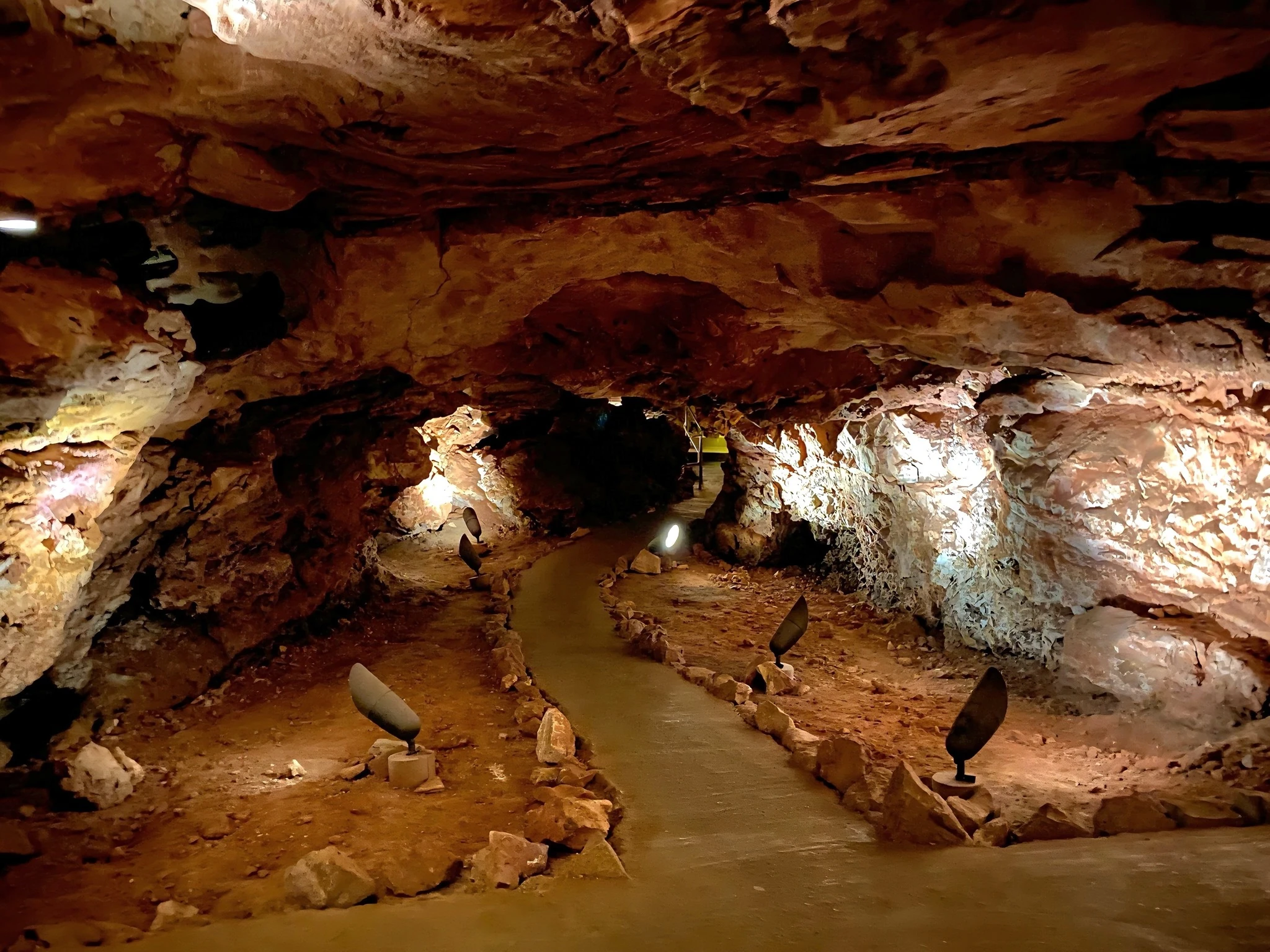
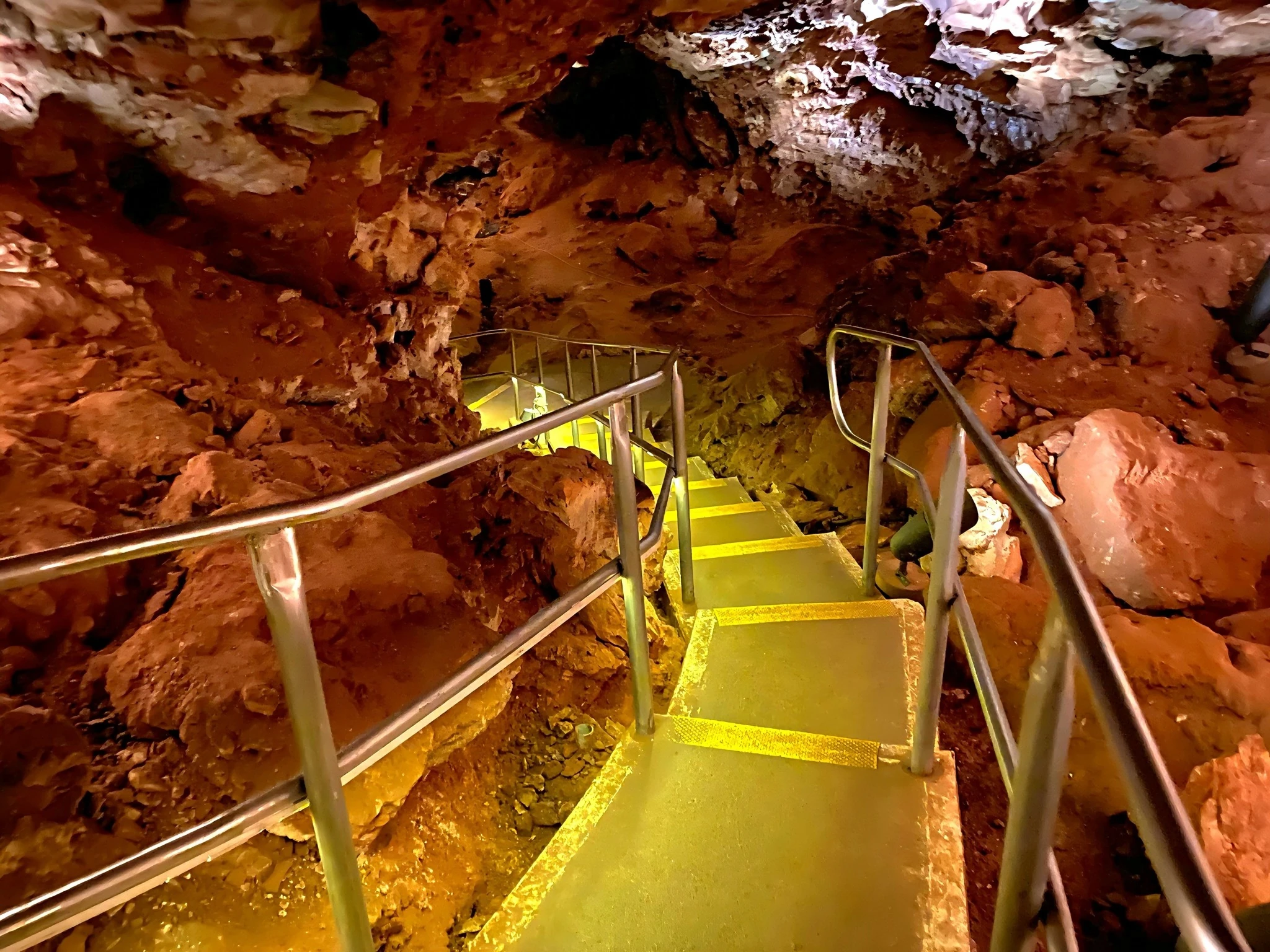
Wind Cave National Park is home to one of the world’s longest and most complex cave systems. I recently descended 12 stories on a ranger-led tour, navigating 300 stairs and ramps while seeing geological formations found in few other places on earth.
It was actually my second time taking the tour. I first visited Wind Cave four years ago, and I couldn’t wait to go back.
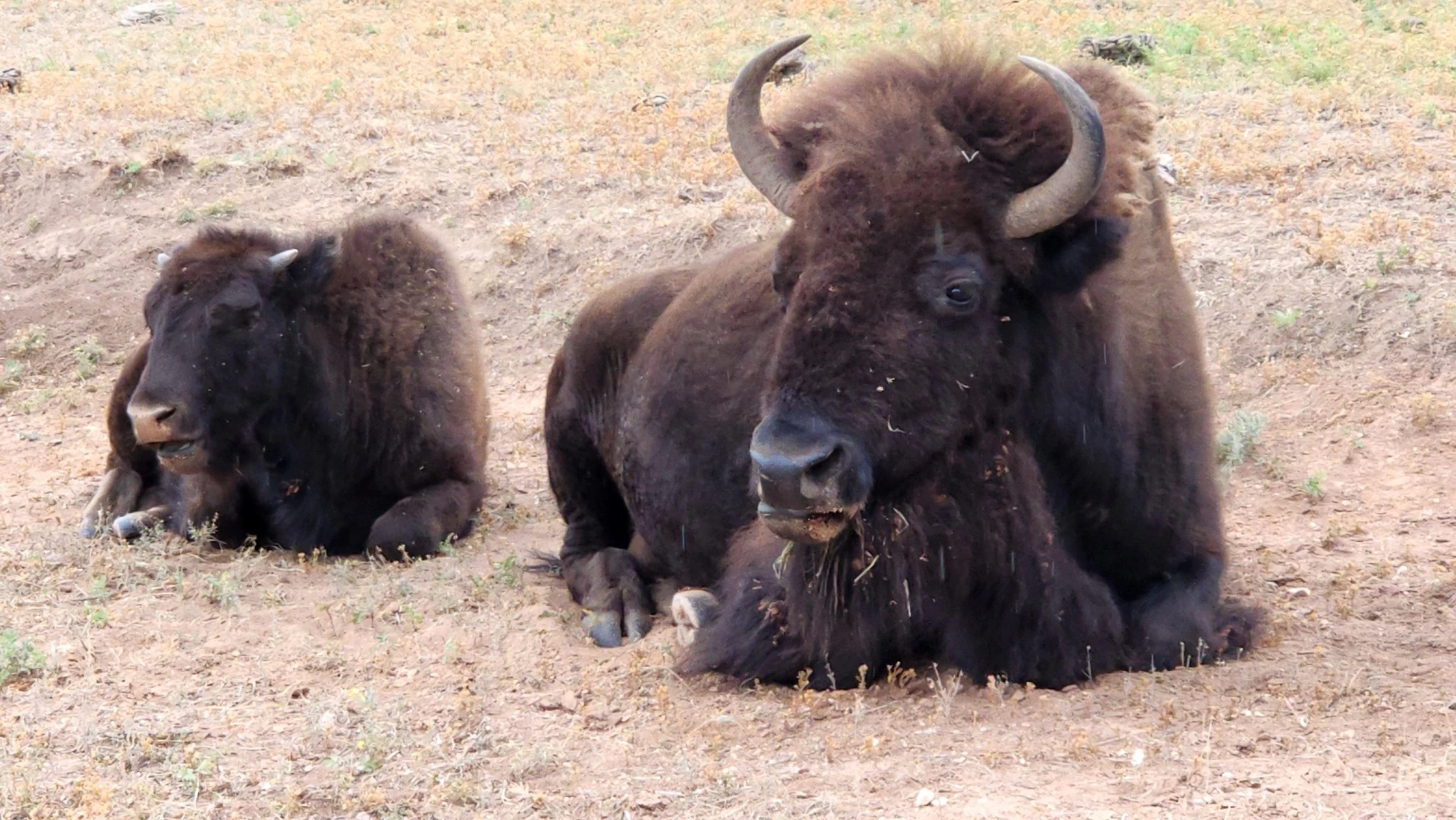
Wind Cave National Park looks nothing like a cave when you first arrive. It’s 33,970 acres of prairie and pine forest teeming with wildlife like bison, elk, pronghorn and prairie dogs. On the drive in, I passed a mamma bison and her calf a few feet from the road.
Then I went underground.
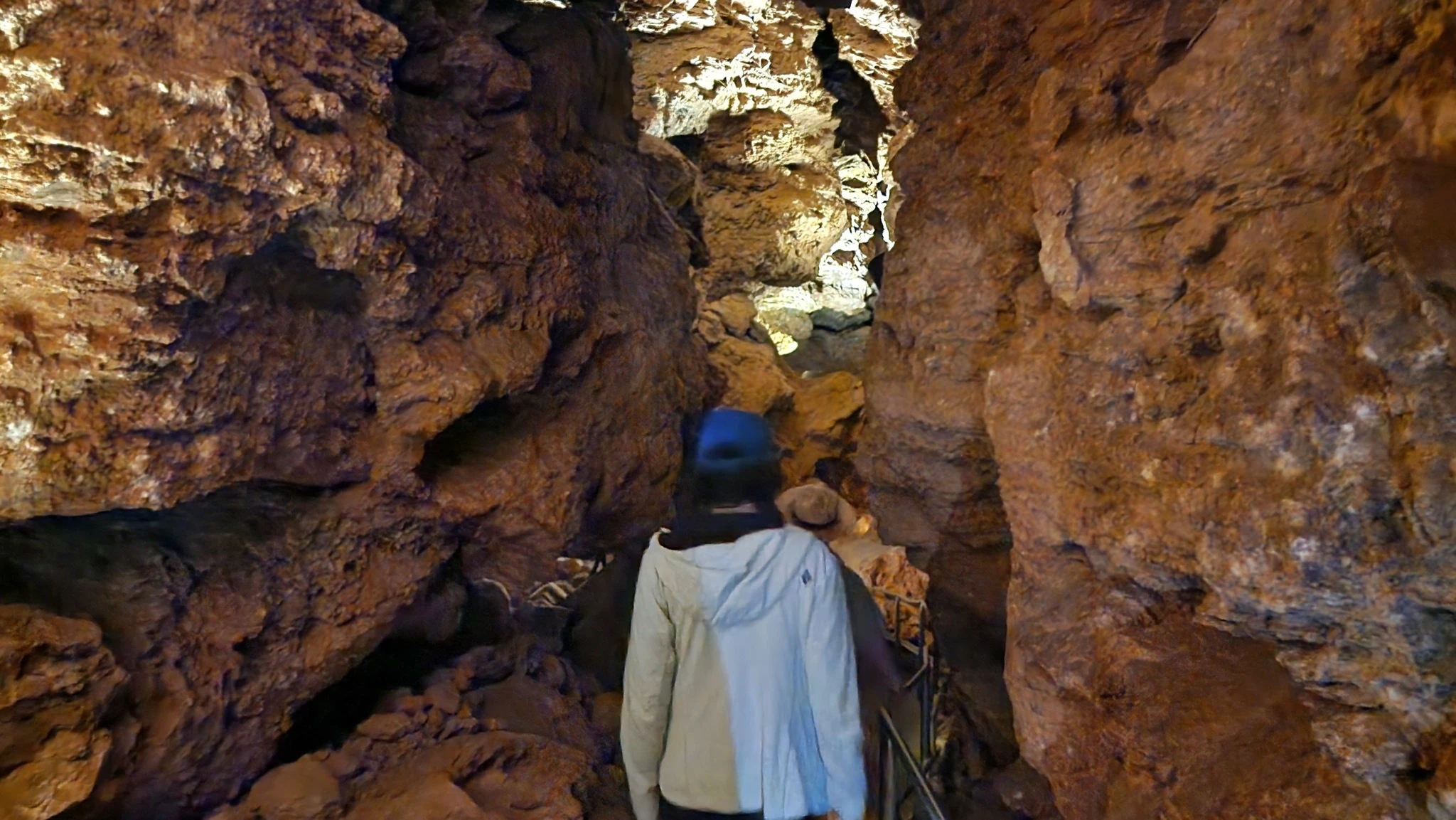
The Natural Entrance Tour takes about 75 minutes and covers two-thirds of a mile, which sounds easy enough. But there are 300 stairs, ramps, and sections where you have to duck to avoid hitting your head. I wouldn’t call it strenuous, but I used muscles I typically ignore, and I felt it the next morning.
Before heading underground, our guide showed us the cave’s natural entrance. It’s a small hole in the limestone, hardly something you’d associate with one of the world’s longest caves. Fortunately, we didn’t have to squeeze through that little hole. Instead, we entered through a man-made entrance with an airlock system that helps maintain the cave’s natural air pressure. We passed through a door, waited for it to close behind us and took an elevator down into the cave.
The cave stays 54 degrees year-round, so you’ll want a sweater or jacket no matter the season. A ranger leads you through dimly lit passages with a flashlight, stopping periodically to explain what you’re seeing.
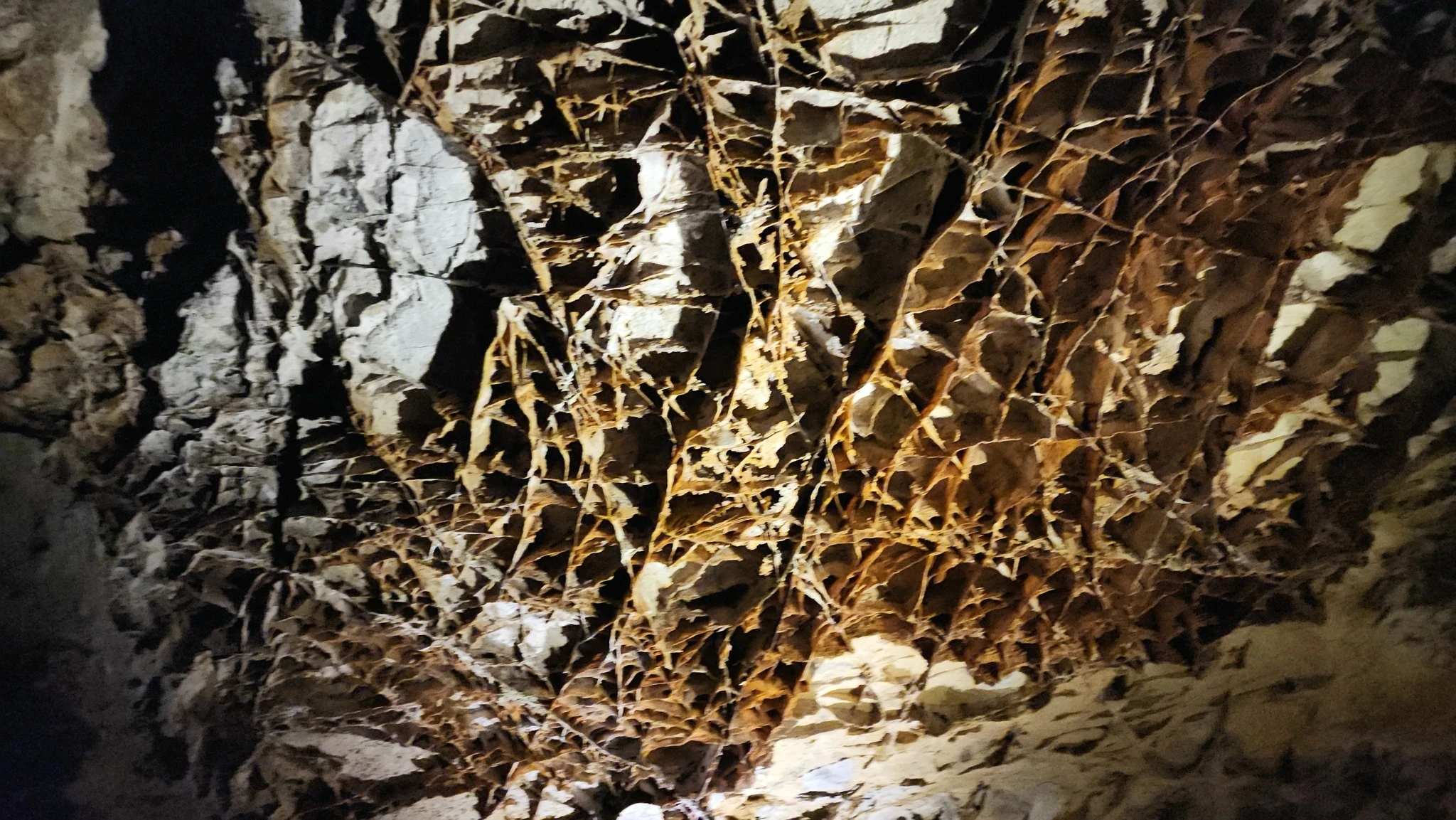
Unlike most caves, Wind Cave has relatively few stalactites or stalagmites. Instead, it’s famous for something much rarer: boxwork.
Picture hundreds of thin stone fins intersecting at different angles, creating little boxes that look almost like honeycombs. Some are tiny and delicate, while others cover large sections of the ceiling, as if placed there for decor.
The formations are made of calcite, and they developed over 300 million years. Minerals filled cracks in the rock, and much of the surrounding limestone and dolomite dissolved away. The harder calcite remained, leaving the intricate patterns behind.
Boxwork is rare in most places, but not here. According to the National Park Service, Wind Cave has more examples than all other known caves on earth combined.
Other formations include cave popcorn, which looks like little clusters of popped kernels stuck to the walls and ceiling. My favorite thing about it? It’s fluorescent and absorbs ultraviolet light, so our guide turned off the lights and used his UV flashlight to “draw” pictures on it in the dark.
Wind Cave’s size is one of its biggest mysteries. People have explored this cave for well over a century, but nobody has managed to find its end. Explorers have mapped more than 160 miles of passages beneath the prairie, and they are still discovering new ones.
Wind Cave is incredibly complex. Rather than having a handful of enormous chambers connected by long tunnels, it consists of passages that twist, turn and intersect on different levels. It’s considered one of the densest cave systems in the world since an astonishing amount of passageway is packed into a relatively small area.
The tour only covers a tiny fraction of the cave. While I was busy navigating stairs and trying to take pictures of the boxwork, professional cavers are still discovering new passages.
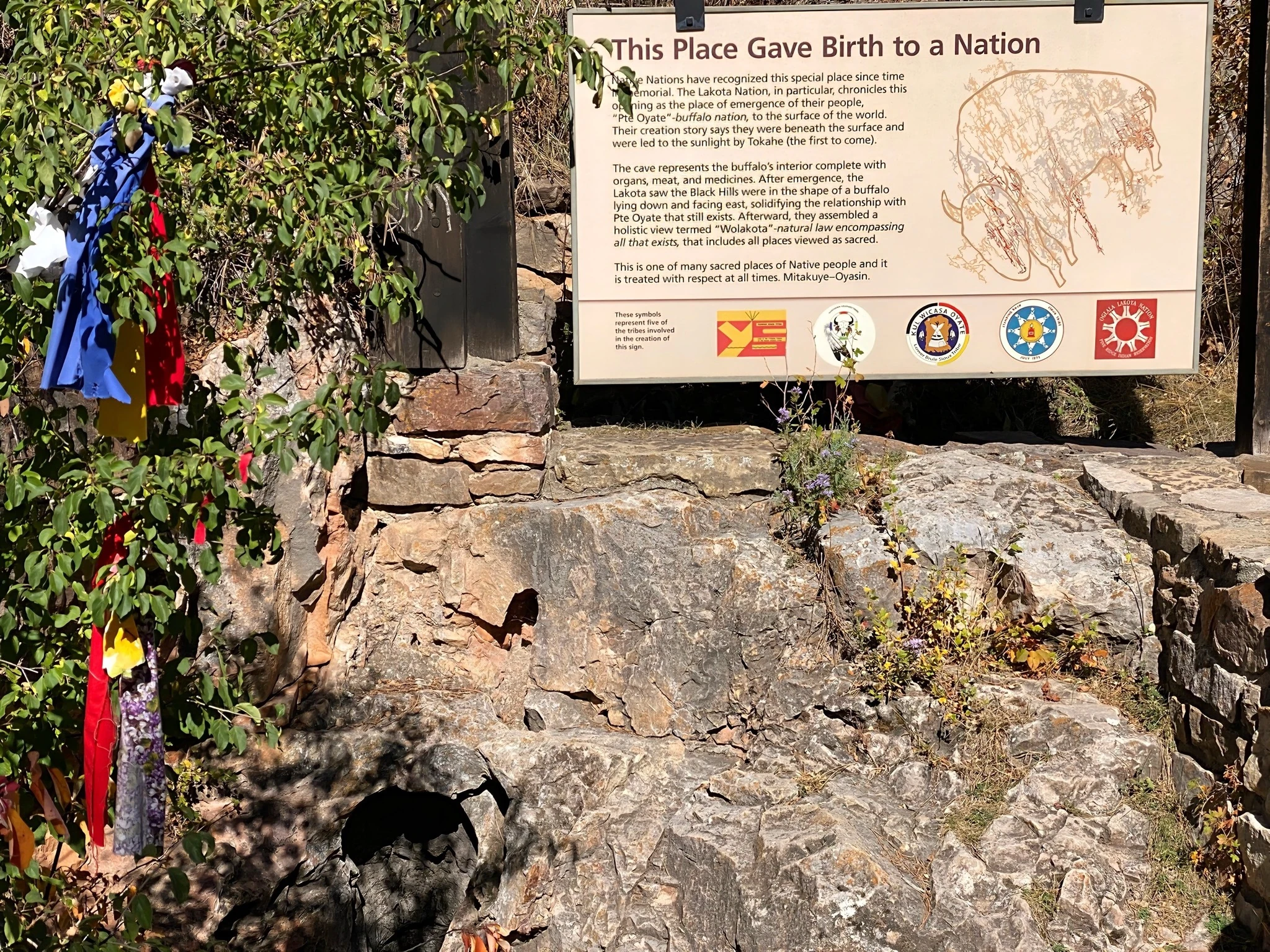
Long before Wind Cave became a national park, the Lakota people considered it a sacred place.
The cave plays an important role in the Lakota emergence story, which describes how the first people came from the spirit world beneath the earth. In one version of the story, the Creator instructed the people to follow the bison after they emerged since the animals would provide food, clothing, shelter, and other necessities.
In the Lakota emergence story, the cave’s natural entrance is associated with the idea of the earth breathing, and it’s easy to see why: Wind Cave really does blow air.
Changes in atmospheric pressure push air in and out of the cave’s small natural opening. Depending on the conditions, the wind can be surprisingly strong. There’s a story about two brothers, Tom and Jesse Bingham, who encountered the entrance in 1881. Jesse reportedly leaned toward the opening, and the wind blew his hat off.
The brothers are sometimes credited with discovering Wind Cave, but Indigenous people had already known about it for generations. By the late 1800s, settlers regularly explored it, and it eventually became a tourist attraction.
Our guide told us that one of the most enthusiastic explorers was Alvin McDonald, who began adventuring into the cave as a teenager in the 1890s. He spent countless hours underground, using candles for light and string to help him find his way back. McDonald mapped miles of passages and kept detailed journals of his explorations before realizing he’d never find the end.
The cave was already well-known when President Theodore Roosevelt established Wind Cave National Park in 1903. It became the eighth national park in the United States and the first national park in the world created specifically to protect a cave.
I was also curious about whether anything actually lives inside Wind Cave. After all, there’s no sunlight, so there are no plants. There isn’t even an underground river carrying water or food through the passages.
It’s not exactly prime real estate for wildlife.
But it does have residents. Tiny creatures called springtails and mites survive on the limited organic material available underground.
Bats also use Wind Cave, although they aren’t commonly seen on public tours. Several species live in the national park, and some hibernate near the cave’s natural entrance.
Wind Cave is about an hour from Rapid City and can be easily combined with the region’s better-known attractions, including Mount Rushmore, the Crazy Horse Memorial and Custer State Park.
You can drive through the park and explore its hiking trails for free. The cave tours require tickets, and reservations are recommended.
The Natural Entrance Tour costs $16 for adults; if you book online there’s a $1 processing fee. The tour lasts approximately 75 minutes, and involves 300 stairs. Fortunately, you don’t have to climb all 12 stories back to the surface: There’s an elevator at the end.
If 300 stairs sound like too much, the Garden of Eden Tour involves 150 stairs and lasts about an hour. The park also offers a shorter accessible tour with no stairs. For people who want a bigger adventure, candlelight tours and more strenuous wild cave excursions both involve crawling through undeveloped passages.
I also recommend allowing time to explore above ground. The park has 30 miles of trails weaving through grassland and ponderosa pine forest, with wildlife along the way.
There’s something special about a 300-million-year-old place that still manages to hold onto its secrets. I’ve visited Wind Cave twice now, and I’ve still only seen a tiny fraction of it. And yes, I’d happily return for another underground tour, stairs and all.
Discover Time Out original video