

[title]
London’s streets are packed with history, and you don’t need to step inside a museum to see it. Next time you’re strolling through the capital, look up at the building next to you and you might just spot a ghost sign.
Halloween is this weekend, but ghost signs have nothing to do with spooky spectres – sadly. The painted signs are faded relics of the city’s commercial past. Before printed billboards became popular in the 1960s, companies used to hand paint their ads onto the brickwork of buildings (AI could never). This started in the late 19th century and peaked in the interwar period.
Today, you can still spot the faded works of art, thanks to the durable oil or lead-based paints that were used by sign writers, or ‘wall dogs’ as they were called at the time. Furniture shops, tobacco sellers and grocery stores were among those advertised, and the signs can be spotted all over London from Peckham to Stoke Newington.
There are 274 surviving ghost signs across the city. A new book, London’s Ghost Signs, which comes out next week on November 1, dives into the story behind the faded businesses, products and trades that once occupied the capital’s streets.
We’ve gone through the list and picked out the 10 most interesting ghost signs. So put on your flat cap and step back in history, here are some of the city’s finest remaining ghost signs and where to find them.
10 of London’s most impressive ghost signs
Cakebread, Robey & Co in Stoke Newington
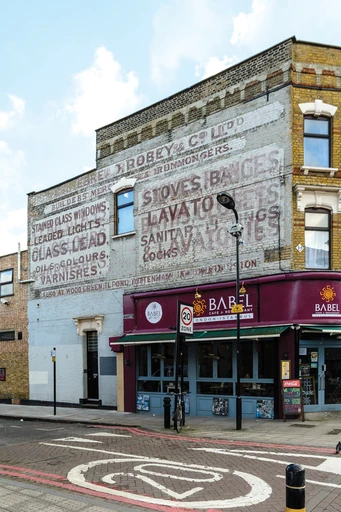
Despite what the name implies, this company had nothing to do with cakes. It was a builders’ merchants founded in 1882 and owned by George Cakebread and Arthur Robey.
The company became popular for its production of stained and etched windows. You can still spot them in pubs and churches across the UK, such as the stained glass at the Salisbury Hotel pub in Green Lanes, and even as far as in Barbados. Amazingly, the shop remained on the high street until 1965.
Tyssen Road, on the corner of Stoke Newington High Street, N16
Take Courage in Borough Market
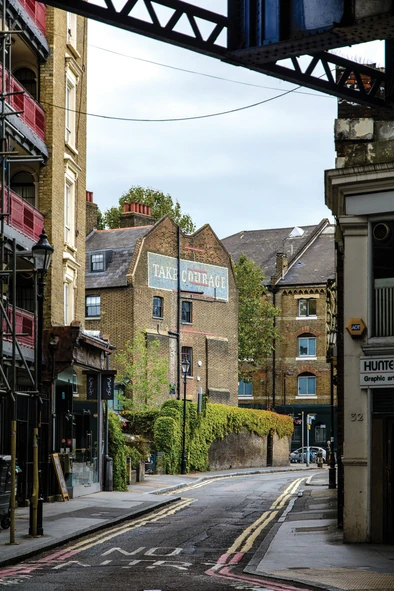
Probably the most famous ghost sign of all is one that reads ‘Take Courage’ and you can find it next to Borough Market. While it sounds like some wartime propaganda, it is actually an ad for a former brewery, painted in 1955, and is a tribute to the neighbourhood’s deep-rooted brewing legacy. It marks what used to be the entry point to the Anchor Brewery, a site first established in 1616 before eventually being acquired by Barclay, Perkins & Co.
Nowadays, it serves as a popular backdrop in tourist photos and a reason for estate agents to make a pretty penny. Savills listed the home as the ‘Take Courage’ house, asking for £5million in 2024. But the next year it was actually bought for £35 – after a lucky winner in the Omaze prize draw won the house.
Redcross Way on the corner of Park Street, SE1
Brymay in New Cross
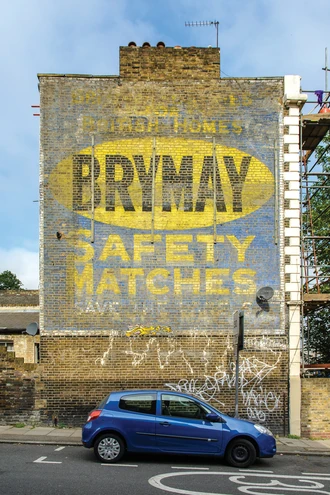
This is one of the most well-preserved ghost signs for an intriguing reason. A layer of soot coated the billboard advertising matchboxes until the 1980s, protecting the pain underneath. What’s left are remarkably bright colours.
Brymay, which is short for Bryant and May, were historic match makers founded by two Quakers in 1843. They had a factory in Bow made infamous when women working there protested against low wages and dangerous working conditions, which became known as the London Matchgirls Strike of 1888. You can still buy Bryan and May matches today.
Alpha Road, on the junction with New Cross Road, SE14
Diespeker & Co. Ltd in Angel
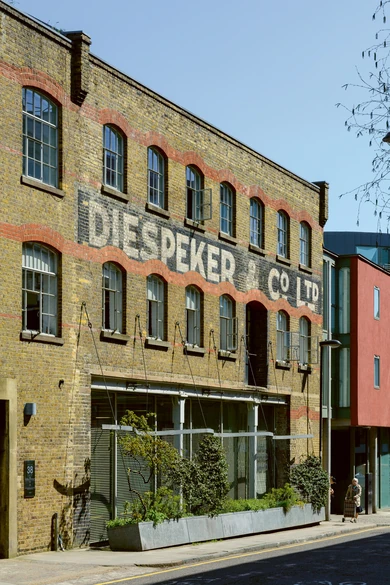
Founded by Italian businessmen in 1881, this company sold mosaic and terrazzo and expanded into the UK, at one point employing 400 people across its sites. But the company ended up with no workers during the Second World War when Italy entered the battle. In 1940, police showed up at Diespeker’s workshops and arrested nearly all of their Italian workers, sending them to Canada, the Isle of Man and Australia. Those who were born in England to Italian parents were forced onto the warfront.
Over its long history, the company has supplied the Royal Academy of Arts, Oxford University, the Victoria and Albert Museum, and Harrods.
Graham Street between Coombs Street and Rocliffe Street, N1
Peterkin in Wandsworth
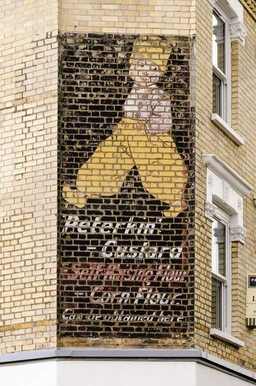
Peterkin made products such as custard but ran into some serious egg-based controversy. Back in the early 1920s, marketing for Peterkin’s custard branded it as 'liquid gold’ and heavily boasted about its ‘real egg’ ingredients. That was a direct dig at egg-free competitors like Bird’s. However, a 1926 court case exposed that the actual amount of egg was pretty minimal. In the end, nobody was convicted, largely because the court decided shoppers shouldn't expect too much given how cheap the product was.
Thanks to a local historical society, Wandsworth Council officially gave the sign local listing status in 2016.
Corner of St John’s Hill and Sangora Road, SW11
Cedars | Marshall in Clapham
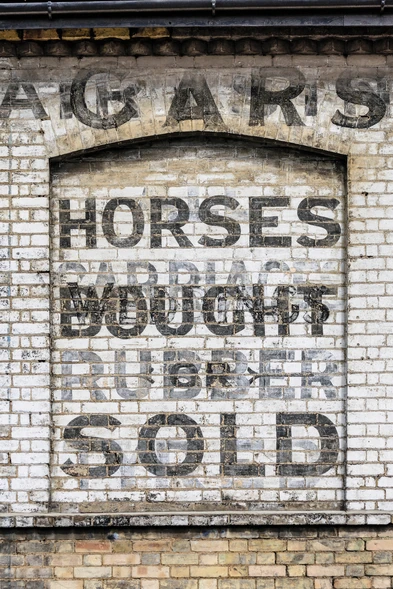
This ghost sign upon ghost sign (officially called a palimpsest) shows society’s transition from horse-drawn carriages to motor vehicles. The business sold services such as horse trading and then later motor mechanics.
It was managed by Catherine Marshall from 1878 until 1920, after which her descendants took over, keeping the doors open into the early 2000s. Today, what’s left is the Cedars trading name, named after the street its found on.
Cedars Road, SW4
Uden & Sons Ltd in New Cross
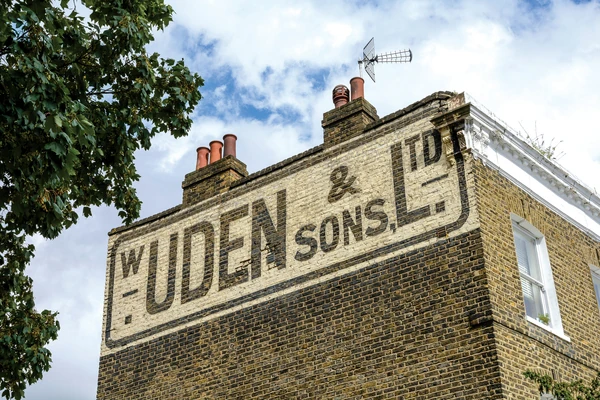
Funeral directors Walter Uden went into business in 1881 and is still operating today across south east London. This branch in New Cross was the undertakers’ first top open and it only closed in 2009.
New Cross Road, SE14
Waterman’s/Walker Bros in Stoke Newington
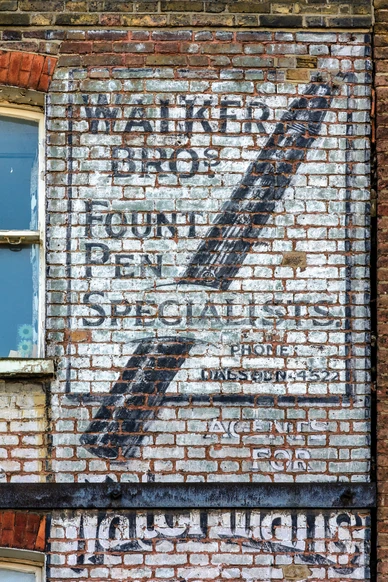
Because stationery shop Waterman’s stopped advertising their ‘ideal’ fountain pen back in 1927, historians are able to pinpoint this sign's creation to the mid-1920s. In 2012, Hackney Council officially added the sign to its Local List to acknowledge its artistic value and local importance.
Stoke Newington Church Street, N16
Nestle and Boro in Wandsworth
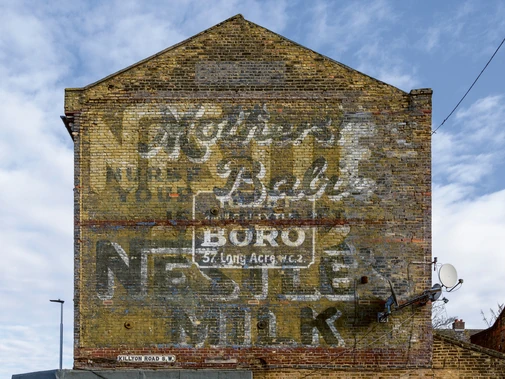
Now here’s a business you’ll have heard of for sure: Nestle. This ad from the 1920s was directly supporting breastfeeding, which is a sharp contrast to the 1970s, when the corporation faced backlash for aggressively promoting its baby formula to mothers across developing nations.
Sharing the same wall are two ads for Boro, a billposting firm.
Killyon Road, corner of Wandsworth Road, SW8
Cutts & Co. in Peckham
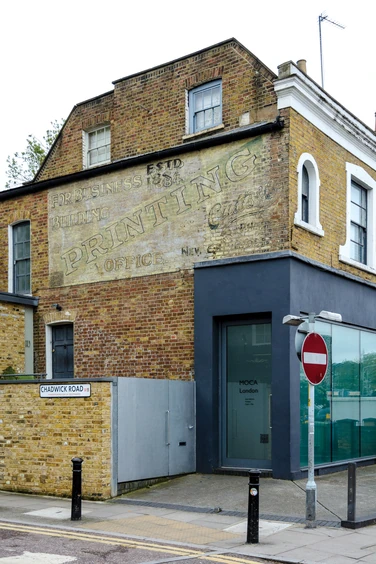
This printing enterprise was originally established by George Cutts back in 1884. The wall sign that remains is now the final surviving trace of the business at this location, and it was repainted at least once.
Corner of Chadwick Road and Bellenden Road SE15
Have you heard the big news? Oxford Street has finally been pedestrianised. We took a first look at it.
Get the latest and greatest from the Big Smoke – from news and reviews to events and trends. Just follow our Time Out London WhatsApp channel.
Stay in the loop: sign up to our free Time Out London newsletter for the best of the city, straight to your inbox.