

[image]
[title]You don’t need us to tell you that the way we socialise has undergone a seismic shift over the last decade, and while social media undeniably brings us some joy, it’s also brought with it doom-scrolling, smart phone addiction, and detrimental impacts on both our face-to-face people skills and mental health.
Needless to say, younger generations – namely Gen Z, who right now are aged between 14 and 29 years old – are struggling to flourish into IRL social butterflies. But, while it’s evident that having the world at your fingertips in the form of a smartphone has impacted the wellbeing of young people, it doesn’t mean the generation as a whole is blind to it.
Recommended: The most beautiful places to visit in the UK in 2026.
Usage of ‘dumb phones’ – where the only function other than calling or texting is maybe playing a game of snake – soared by 148 percent among 18-24 year olds between 2021 and 2024, and Gen Z is also turning to tailor-made face-to-face communities to reignite their human connections. These range from book clubs to craft clubs, and groups of runners, swimmers and climbers – in fact, the Guardian just dubbed this phenomenon ‘community-maxxing’.
Recently, this has multiplied into a swathe of new groups all over the UK which are dedicated to hiking. But, can rendezvousing with a bunch of strangers help undo the damage screens have done to our brain-rot fried attention spans? Here’s what we found out.
The gloomy reality of doom-scrolling
We’re all a little too familiar with the retina-searing addictiveness of that For You page, but it transpires that, according to this study by professors of psychology Przybylski and Weinstein from way back in 2012, the mere presence of a mobile phone can hamper the quality of a conversation taking place nearby, before you’ve even begun scrolling.
There’s also the concept of ‘phubbing’ (or ‘phone-snubbing’) which describes when one person ignores who they’re with to scroll on their phone. Research has found that the phenomenon is both caused by smartphone addiction and is a coping mechanism used by people with social anxiety, which in turn makes real-life social interactions much harder. Phubbing has even been found to lead to weaker interpersonal relationships and lower levels of trust between peers, according to a paper by professors of psychology and behavioural sciences Tufan, Köksal and Griffiths from 2026.
It would be a mistake to assume Gen Z is a helpless bunch of kids
All this has contributed to what we now refer to as the ‘loneliness epidemic’, with people spending more time alone than ever before – in fact, research from 2023 found that when technology replaces human interaction, loneliness is exacerbated, evidenced particularly by people who are heavy users of social media, and it has highly detrimental effects on our health.
All this talk of looming loneliness sounds rather bleak, but it would be a mistake to assume Gen Z is a helpless bunch of kids unable to improve their own circumstances when it comes to making friends.
From a massive surge in book clubs to a 59 percent increase in run club participation across the planet over the last two years (according to Strava), young people are finding friendship in a steadily rising number of IRL meet-ups, but the biggest surge of late? That would be in hiking clubs.
Meet the founders
Across the UK (and, paradoxically, our Instagram feeds), groups in a lovely mix of shapes and sizes, who range from ‘open-to-all’ or who target and welcome particular demographics, have cropped up, offering screen-addled Brits a change to chronically online life. Hiked Up, co-founded by Essex-born friends Matt and Adam, began as the pair’s arrangement for socially-distanced walks but has since morphed into an established community after they gained a significant following on social media.
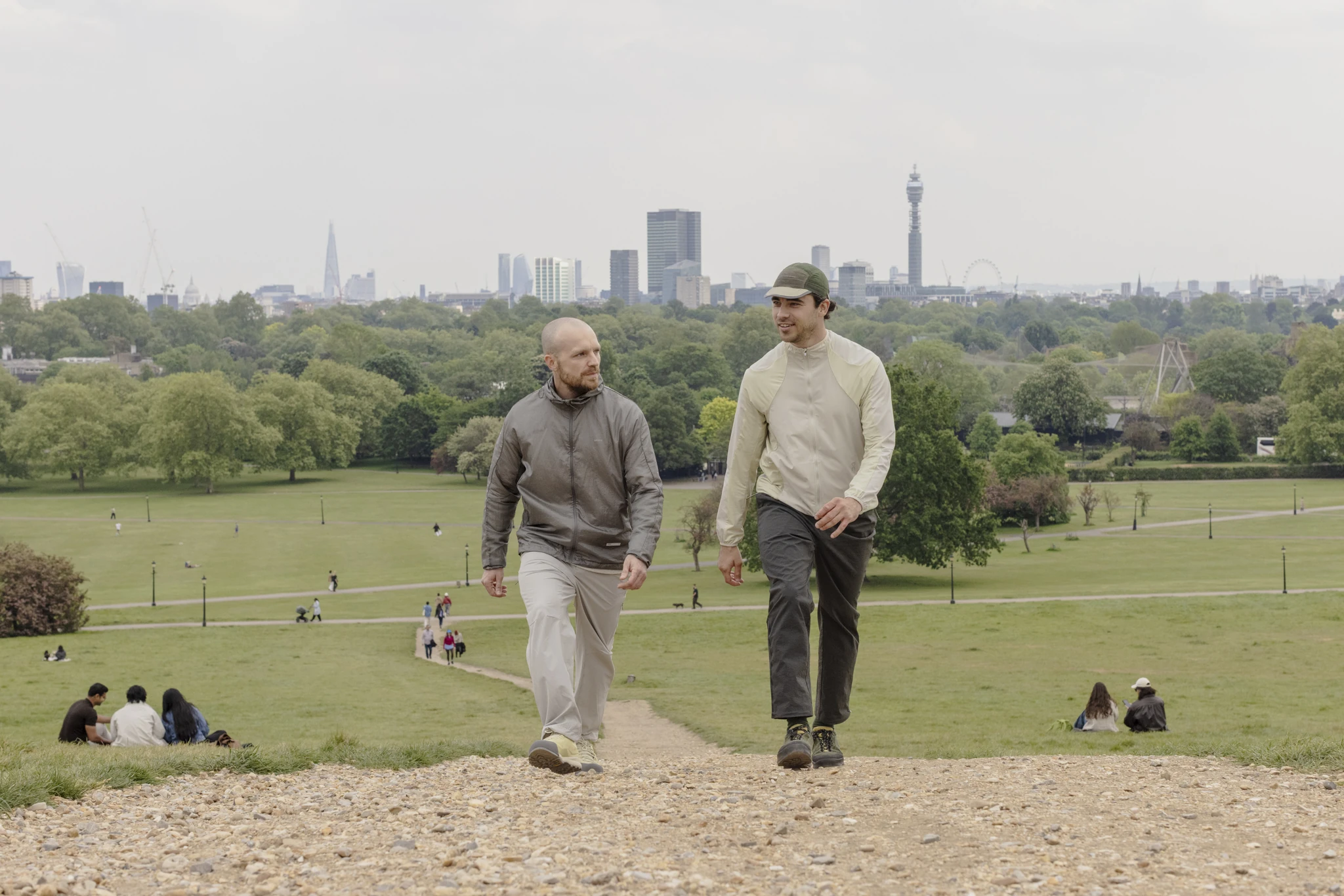
Now, they run monthly, UK-based hikes to destinations like the Lake District, Peak District, and the South Downs, as well as having organised a handful of international trips and ‘side quests’ like trail running or bike-packing, too.
Dykes Who Hike, which is a collective welcoming queer, trans, non-binary, and lesbian walkers, also operates around London to day-trip destinations, predominantly in the south east.
‘Lucy and I met in January 2024 at a basketball club. We’d both been looking for [queer hiking] groups but had only found one for older gay men,’ says Yas, ‘We kind jokingly said that we would just set one up.’
But, after posting a video on TikTok which garnered a staggering 20,000 views and, thanks to the algorithm, attracting exactly the community Lucy and Yas felt was lacking in their own hiking space, the first hike saw a group of 60 random people gathering outside a WH Smiths at Victoria Station.
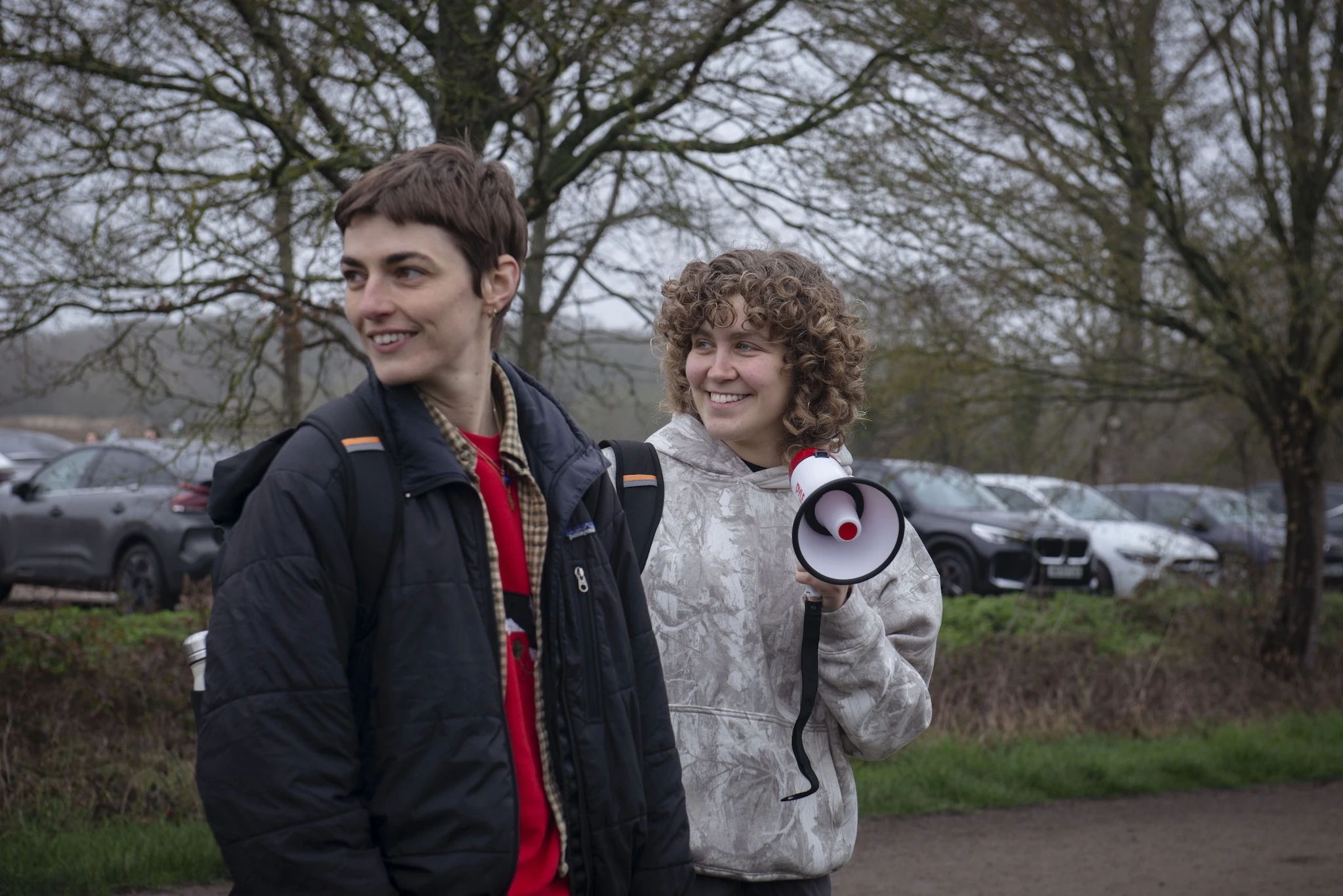
Not to be confused with Dykes Who Hike, Girls Who Walk is a community which has regional divisions all over the UK. Sejal is the founder of the Leicester branch, which runs weekly walks which vary in length and often end at coffee shops, as well as other events like craft or movie nights, too.
All three groups have followed a similar trajectory: a wholesome arrangement to touch grass morphing into an active and established offline community. But, have attendees actually managed to foster new, real, human, connections?
Run clubs, climbing gyms, whatever else you can think of, are excellent spaces for meeting new people, but you can hardly bond over other hobbies when you’re halfway up a bouldering wall or desperately panting to keep up with a group. Walking – or hiking – is actually a whole lot more amenable to socialising.
Groups like this are a healthier, lower-pressure way to meet people.
‘To join a run club, you have to actually enjoy running, whereas most people tend to walk every day,’ explains Adam, from Hiked Up. ‘Our hikes aren’t crazy; anyone can join without a real sense of athletic ability. Walking along a countryside trail means you can just have a proper chat.’
The slower-paced environment also makes hiking groups particularly conducive to flexing the socialising muscles without involving screens or alcohol – and it rapidly fosters a proper sense of community.
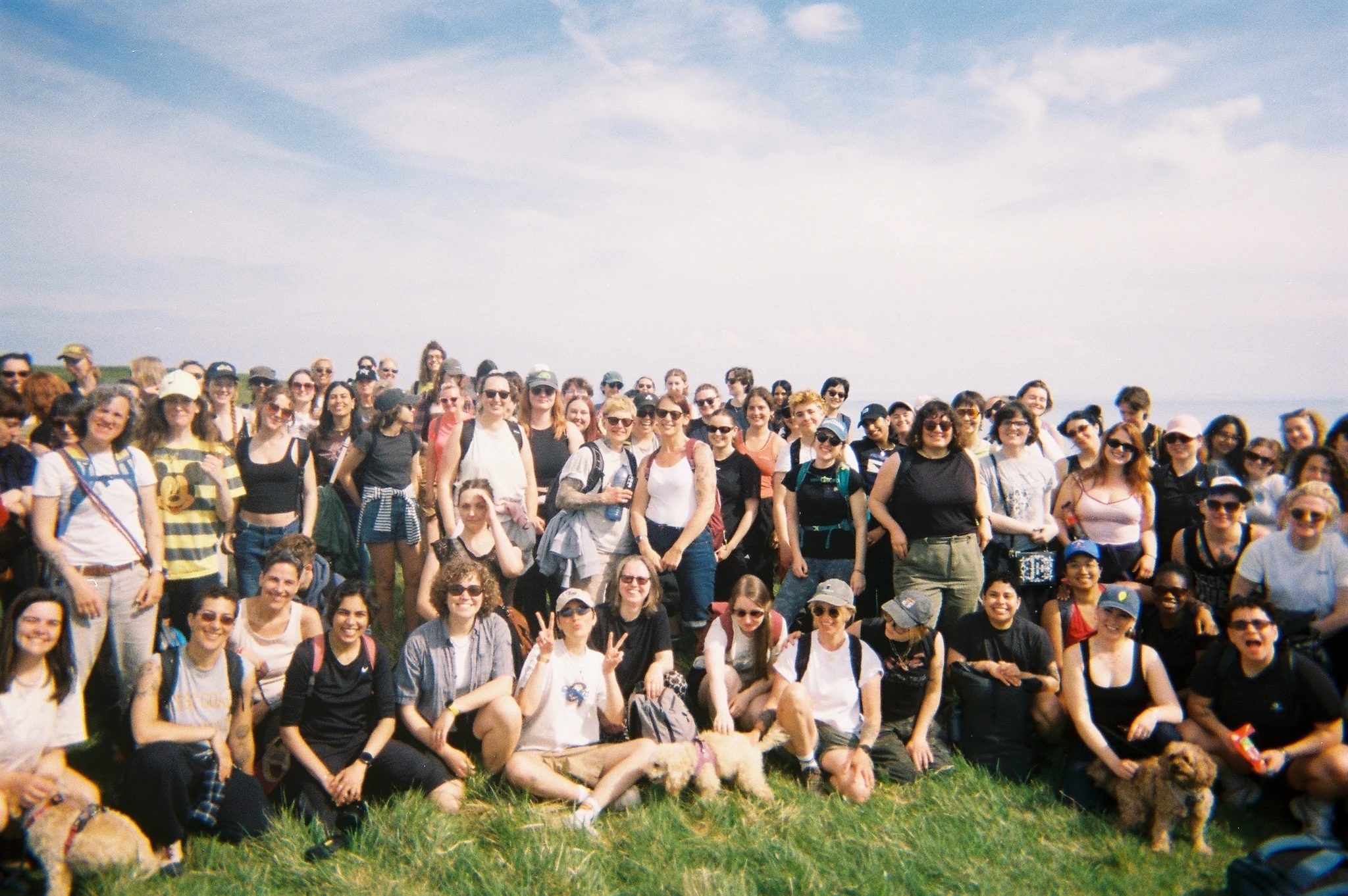
On their second walk, turnout to join Dykes Who Hike surged to 200 people. ‘I was navigating using Google Maps – I’d never even heard of AllTrails,’ says Yas. ‘After I led 200 people up the wrong hill, someone stepped in to navigate. Now, every single walk, members of the community just step up to show newcomers the ropes.’
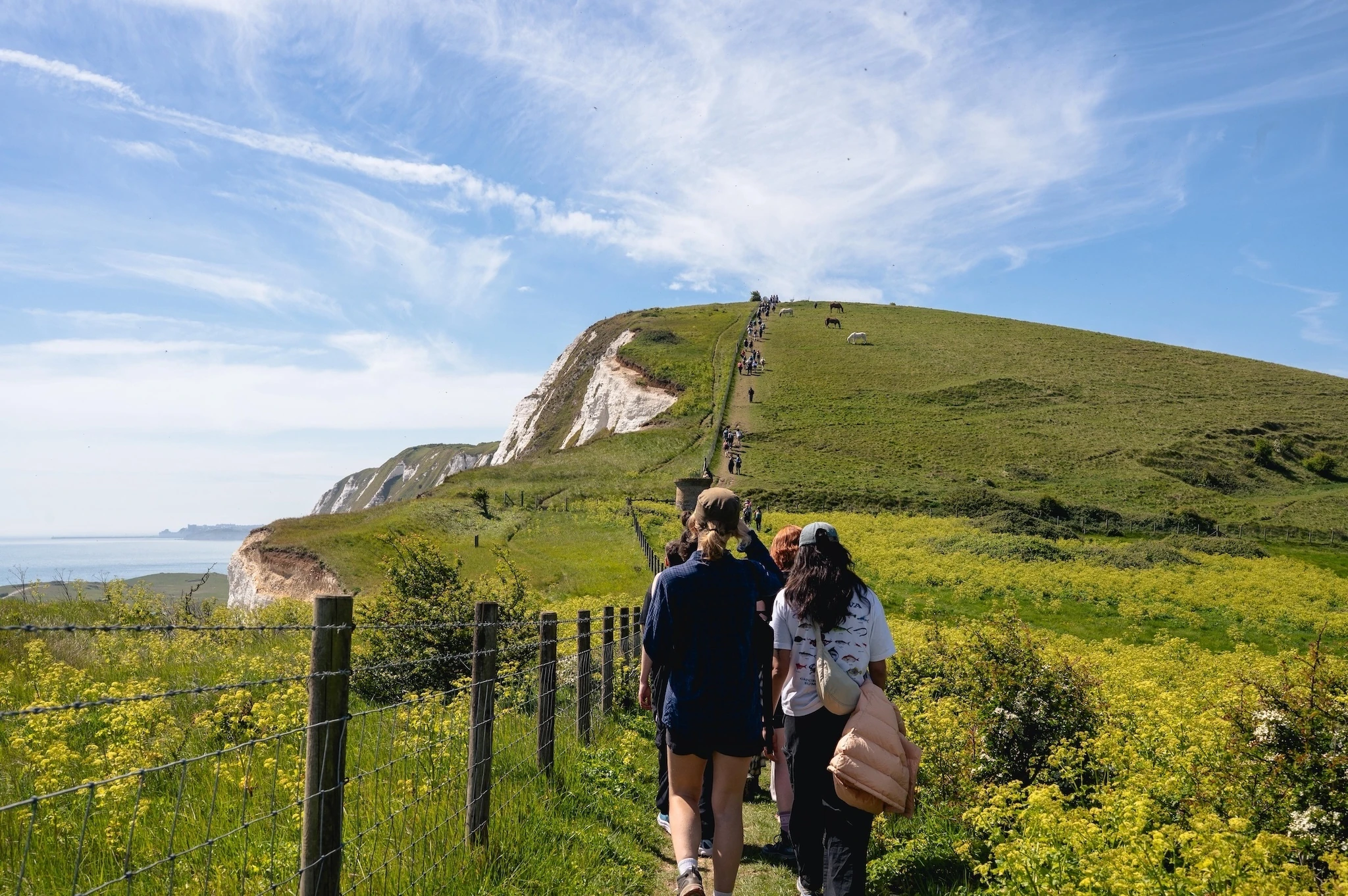
‘Matt and I went through that age where we’d go to the pub and drink, but doing stuff that wasn’t fulfilling,’ Adam adds. ‘Groups like this are a healthier, lower-pressure way to meet people.’
The consensus these days of course is that Gen Z is an army of fun-phobic teetotalers. While this isn’t exactly true (74 percent of Gen Z now report having had a drink in the last six months, according to Business Insider, which is on par with older generations), there definitely has been a marked shift towards more sober socialising. It’s come not only from a keenness to save money, but also for a healthier, more balanced lifestyle.
The consensus these days is that Gen Z is an army of fun-phobic teetotalers
‘There’s been a lot of talk about having a ‘third space’,’ says Sejal, from Girls Who Walk Leicester. ‘So many classic third spaces – traditionally a cafe, community space, or seeing friends – have been replaced by doomscrolling.’
‘What’s nice about what we do is that it’s very much in-person,’ she continues, ‘Fewer people are drinking or going ‘out out’ at the weekend; they’re choosing to spend their time doing activities with sustainability and longevity.’
And she’s not joking about longevity – women who met at a Girls Who Walk meet have formed friendships solid enough to go on holiday together or even become flatmates.
An antidote to loneliness
If you’re reading this thinking it all sounds like a wholesome but rather daunting way of putting yourself out there, you’re not alone.
Showing up solo to a group of 50 to 200 strangers might be a living nightmare for anyone suffering from post-phone social anxiety. Yet, the physical dynamic of a hike seems to cure the very reservedness tech culture creates.
‘At the beginning of our events, you can spot the people who haven’t been before – they’re very quiet and reserved,’ says Matt. ‘But by the end of the hike, everyone’s mingling. In the space of four to six hours, you’ve gone from being reserved and solo to exchanging numbers, being part of the group, and having a laugh.’
The proof is in the pudding – after some novice hikers turned up to one of their sessions and got along well, Matt and Adam recall receiving photos from on their own expedition to Norway, with the group’s flag planted atop a fjord.
So, it seems that while hiking groups are, first and foremost, a sociable way of getting some proper fresh air, they’re also a breath of fresh air when it comes to the real-life bonds they help foster.